
Mold remediation cost in Florida usually lands in the low thousands of dollars. Three national price guides put the typical job between about $1,100 and $9,000, with small patches near $500 and whole-house jobs at $10,000 to $30,000. Where your number falls depends on how much area is affected, what is behind the wall, and whether the water that fed the mold is still there. This guide walks through the sourced price ranges, what drives them, and the Florida rules that change how you buy mold remediation here.
National figures from This Old House (updated March 11, 2026). Fixr's guide runs higher, see below.
How Much Does Mold Remediation Cost?
Most homeowners pay between about $1,100 and $3,750 for mold remediation, based on the national guides below. The guides agree on the shape of the market and disagree on the middle of it. Fixr's average is about $1,200 higher than the other two, which is a fair warning that any single "average" is a rough guide, not a quote.
| Source (last updated) | Average | Typical range | Per sq ft |
|---|---|---|---|
| This Old House (Mar 2026) | $2,300 | $1,200 to $3,750 | $10 to $25 |
| Fixr (Aug 2025) | $3,500 | $1,500 to $9,000 | $10 to $30 |
| Bob Vila, citing Angi and HomeAdvisor (Apr 2024) | $2,254 | $1,125 to $3,439 | $10 to $25 |
At the ends of the range, This Old House puts a small patch at $500 to $1,500 and whole-house remediation at $10,000 to $30,000. Fixr's low example is a $500 bathroom job, and its high example is $30,000 for a whole 2,000 square foot house.
What Is the Average Cost of Mold Remediation per Square Foot?
Expect roughly $10 to $25 per square foot of affected area, or up to $30 by Fixr's numbers. Square footage here means the area the mold has grown on or into, not the size of your home. This Old House's breakdown by size:
| Affected area | Typical cost |
|---|---|
| 50 sq ft | $500 to $1,250 |
| 100 sq ft | $1,000 to $2,500 |
| 200 sq ft | $2,000 to $5,000 |
| 500 sq ft | $5,000 to $12,500 |
| 1,000 sq ft | $10,000 to $25,000 |
The catch is that nobody knows the true area until the wall or floor is open. A stain the size of a dinner plate on the outside of drywall can sit on top of a much larger patch on the back side.
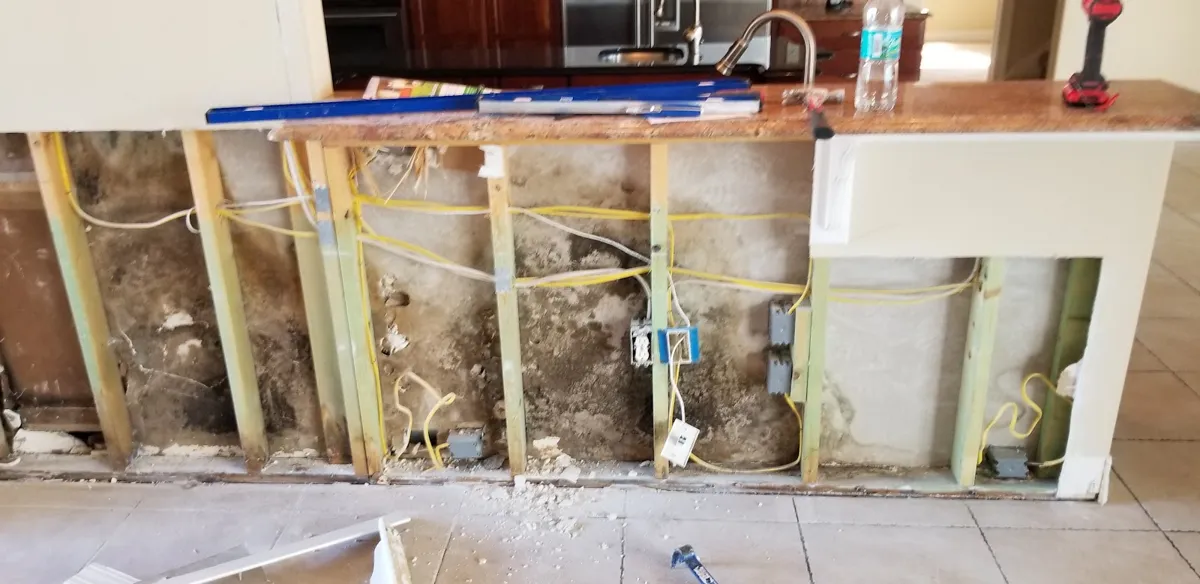
Mold Remediation Cost by Location: Attic, Bathroom, Walls and AC
Where the mold is changes the price more than almost anything else, because it decides how hard the area is to seal off and how much material has to come out.
| Location | Typical cost | Source |
|---|---|---|
| Bathroom | $500 to $1,000; up to $8,000 behind a vanity or tub | This Old House; Bob Vila |
| Crawl space | $500 to $2,000 | This Old House |
| Air ducts | $600 to $2,000 | Bob Vila |
| Attic | $1,000 to $4,000; up to $7,000 if the problem is ongoing | This Old House; Bob Vila |
| Walls (drywall) | $1,000 to $20,000 | Bob Vila |
| HVAC system | $3,000 to $10,000 | This Old House |
| Whole house | $10,000 to $30,000 | This Old House |
National guides also list basements. Florida homes rarely have them, so that line does not apply here. What we see most in Florida homes is mold in bathrooms and under sinks, behind cabinets after a leak, in attics under roof leaks, and around AC air handlers where condensation never dries.
Black mold remediation cost
Black mold is priced the same way as any other mold: by area, location and how much material has to come out. The color does not set the price. The extra care is in keeping the area sealed while the work is done.
Mold in the AC system
Air handlers and ducts are at the high end of the table because the system can carry spores through the whole house. The EPA's advice is direct: do not run the HVAC system if you know or suspect it has mold in it. In a Florida summer that is hard advice to follow, which is one more reason to get it looked at quickly.
Why Mold Remediation Costs What It Does
Labor is the biggest part of the bill. This Old House says it is usually more than half the total, and Bob Vila puts it near 60%. Remediation is slow, careful work:
- Containment. Plastic walls and negative air keep spores from spreading into rooms that are clean today.
- Removal. Porous material the mold has grown into, such as wet drywall and insulation, is cut out and bagged. The EPA notes that absorbent materials like ceiling tiles and carpet may have to be thrown away once they are moldy.
- Air cleaning. HEPA filtration runs during and after the work.
- Drying. The structure has to be dry before the job is done, or the mold comes back.
This Old House also lists costs that sit outside the remediation line: structural repairs, HVAC cleaning, temporary housing, waste disposal, clearance testing, and permits or inspections. Putting back drywall, paint and cabinets is usually its own line on the estimate. Ask any company you call which of these are in their number and which are not.
Is Mold Testing Part of the Price in Florida?
In Florida, usually not, and that is by law. Florida licenses mold assessors and mold remediators separately through the Department of Business and Professional Regulation (DBPR). Under section 468.8419, Florida Statutes, a mold assessor may not remediate a structure their company assessed in the last 12 months, and a remediator may not assess a structure their company remediated in the last 12 months. The law makes an exception for certain certified contractors.
The point of the rule is simple: the company that tells you how big the problem is should not be the company that gets paid to fix it. National guides that say a remediation company can test for you are describing other states. Here, budget for the assessment as a separate cost. Fixr puts a mold inspection at $450 to $800 nationally, on top of remediation.
Is getting a mold inspection worth it?
For a small, visible patch from a known leak, many homeowners skip it. When the mold is hidden, widespread, or you need a clear scope for an insurance claim or a home sale, an independent assessment is worth the money. It defines the job, so every remediation quote you get is pricing the same work.
Is Professional Mold Remediation Worth It?
It depends on the size. The EPA says that if the moldy area is less than about 10 square feet, in most cases you can clean it up yourself. Florida's licensing law draws its line in the same place: section 468.8411 defines mold remediation as work on more than 10 square feet of mold, and that work needs a licensed remediator.
Above that size, or when the mold is inside a wall, under flooring or in the AC, doing it yourself can cost more in the end. Disturbing growth without containment spreads spores into clean rooms, and cleaning the surface while the wall behind it stays wet means it grows back. You can check any Florida remediator's license by name on the DBPR license search before you hire them.
What Goes Into a Quote From Us
We price mold remediation after we have seen it, because the numbers above swing so widely. Mr. Dry Out is licensed by the Florida Department of Business and Professional Regulation to remediate mold, and these are the things that set the price of the job:
- The moisture source. Mold almost always follows water: a slow plumbing leak, AC condensation, a roof leak or a flood that was never fully dried. We trace it with moisture meters first, because remediation does not hold while the source is still wet.
- How far the growth has spread. The affected square footage, including what is behind drywall, cabinets and flooring.
- The size of the containment. One closet takes far less plastic, negative air and setup than a kitchen and hallway.
- What has to come out. Wet drywall and insulation the mold has grown into are removed. Framing and structure stay.
- Air cleaning and treatment. HEPA filtration during and after removal, and surfaces cleaned and treated with antimicrobial.
- Drying the structure. Our TES (Thermal Energy System) drives controlled heat into the wet area, with daily moisture readings until it reads dry, not just dry to the touch.
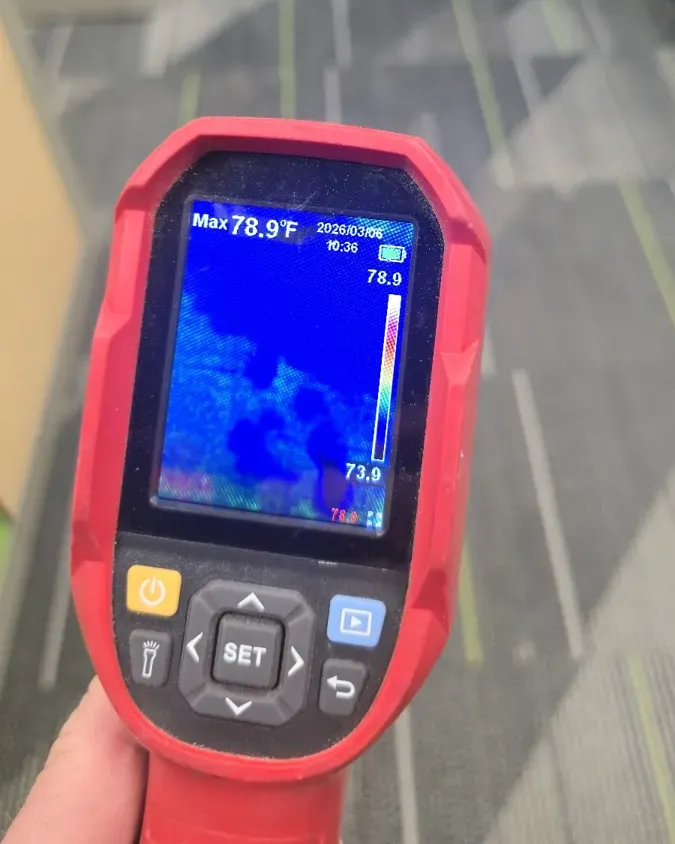
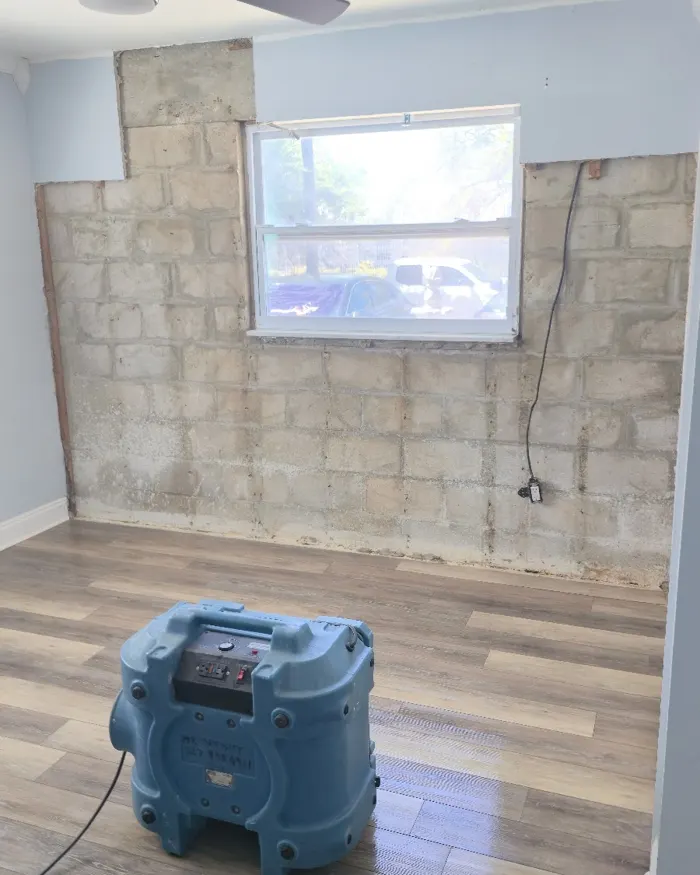
Because we are a water damage company as well as a licensed mold remediator, one crew handles the leak, the water extraction, the drying and the mold. That avoids a common reason remediation fails: a second contractor treating mold on a structure that is still wet. If the mold came from a sudden, covered water loss like a burst pipe or appliance leak, we document every step and bill your insurance directly. Mold from long-term humidity or a slow leak is usually excluded, and we will tell you plainly which one you are looking at.
Mold Removal vs. Mold Remediation: Does It Change the Price?
Yes. Mold removal means taking away the visible growth. Mold remediation is the whole job: containing the area, removing contaminated material, cleaning the air, fixing the moisture and drying the structure. A removal-only price will be lower, and it is also how mold comes back.
If you are still working out whether you have mold at all, our mold removal page lists the common signs, and mold in walls covers the hidden growth we find most often.
When to Call for Mold Remediation in Tampa Bay
Call when the patch is bigger than about 10 square feet, when it keeps coming back after cleaning, when you smell it but cannot see it, or when it follows a leak or flood. Speed matters with water: the EPA says to dry water-damaged areas within 24 to 48 hours to prevent mold growth, and to keep indoor humidity below 60%, ideally between 30% and 50%.
Our crews work out of Hudson and cover the Tampa Bay area, including Hudson, New Port Richey, Spring Hill, Tampa, Clearwater and St. Petersburg. For a quote on your home, see our mold remediation service or call us any time. We answer 24/7.
Mold Remediation Cost FAQ
National guides put it at about $10 to $25 per square foot of affected area (This Old House, 2026), or up to $30 by Fixr's figures. The square footage is the area the mold has grown on, which is often larger behind the wall than it looks from the front.
Usually not. Florida law (section 468.8419, Florida Statutes) bars a mold assessor from remediating a structure their company assessed in the last 12 months, and the reverse, with an exception for certain certified contractors. Budget for an independent assessment as a separate cost; Fixr puts a mold inspection at $450 to $800 nationally.
Often, when the mold came from a sudden, covered water loss like a burst pipe or appliance leak. We document everything and bill the claim directly. Mold from long-term humidity or a slow leak is usually excluded, and we will tell you plainly which one you are looking at.
Most residential jobs take a few days, depending on how far the growth has spread and how much material has to come out. Drying the structure is part of the job, and we keep going until moisture readings say the area is dry.
Start by finding out whether it came from a covered water loss, because then the claim may pay for it. Stop the water source as soon as you can, since wet material keeps feeding the growth. If the patch is under about 10 square feet on a hard surface, the EPA says you can usually clean it yourself.
For a small patch, yes. The EPA says an area under about 10 square feet can usually be handled yourself. Larger growth, mold inside walls or under flooring, or mold that follows a water loss needs containment and HEPA filtration, and in Florida remediation of more than 10 square feet is licensed work.