
Water damage restoration cost for most homes falls between about $1,200 and $5,000, with a national average near $3,000. The number depends on three things more than anything else: how dirty the water is, how much of the house got wet, and how long it sat before drying started. This guide breaks down the sourced price ranges by water type, by size of loss and by room, explains what the work includes, and covers what Florida homeowners should know about insurance before they call for water damage restoration.
National figures from Fixr's water damage restoration cost guide (updated January 31, 2025). Bob Vila's figures run a little higher, see below.
How Much Does Water Damage Restoration Cost?
Most homeowners pay between about $1,200 and $5,700 to restore water damage, based on the two national guides below. Both agree that small, clean-water jobs can run a few hundred dollars and that long-standing flood water can run into five or six figures.
| Source (last updated) | Average | Typical range |
|---|---|---|
| Fixr (Jan. 31, 2025) | $3,000 | $1,200 to $5,000 |
| Bob Vila, citing Angi and HomeAdvisor (May 30, 2023) | $3,455 | $1,305 to $5,707 |
Fixr lists $350 as a realistic low end, for a small leak caught early, and $50,000 at the high end. Labor runs about $70 to $200 an hour for a restoration company in both guides, and Fixr adds emergency call-out fees of about $100 to $200 on top.
Water Damage Restoration Cost by Type of Water
The type of water sets the price per square foot more than anything else, because dirtier water means more protective equipment, more cleaning and more material that cannot be saved. The industry sorts it into three categories.
| Type of water | Common sources | Per sq ft |
|---|---|---|
| Clean (Category 1) | Burst supply line, overflowing sink, water heater | $3.75 to $4.25 |
| Gray (Category 2) | Dishwasher or washing machine discharge, toilet overflow without waste | $4.10 to $6.50 |
| Black (Category 3) | Sewage backup, toilet overflow with waste, outside flood water | $7.00 to $7.50 |
Bob Vila's ranges are close: $3 to $4 for clean water, $4 to $6.50 for gray and $7 to $7.50 for black. Both note that the black water price covers removal and drying only. Replacing contaminated drywall, flooring and insulation is extra, and with sewage most porous material has to go.
Cost by How Much of the House Got Wet
The second driver is how far the water spread and how deep it soaked in. Restoration companies call this the class of the loss. Both guides use the same ranges.
| Class | What it looks like | Typical cost |
|---|---|---|
| Class 1 | Part of one room, little soaked into walls or carpet | $150 to $400 |
| Class 2 | A whole room, with water wicking up to about a foot into walls | $500 to $1,000 |
| Class 3 | Most of a room or several rooms, including ceilings, walls and subfloor | $1,000 to $3,000 |
| Class 4 | Long-standing water, as after a hurricane or river flood | $20,000 to $100,000 |
Even in Tampa Bay, most water damage does not come from storms. It comes from inside the house: a supply line under a sink, a water heater, a dishwasher, a toilet, a slab leak or an AC drain line. Caught quickly, most of those stay in the Class 1 to Class 3 range.
Cost by Room and Material
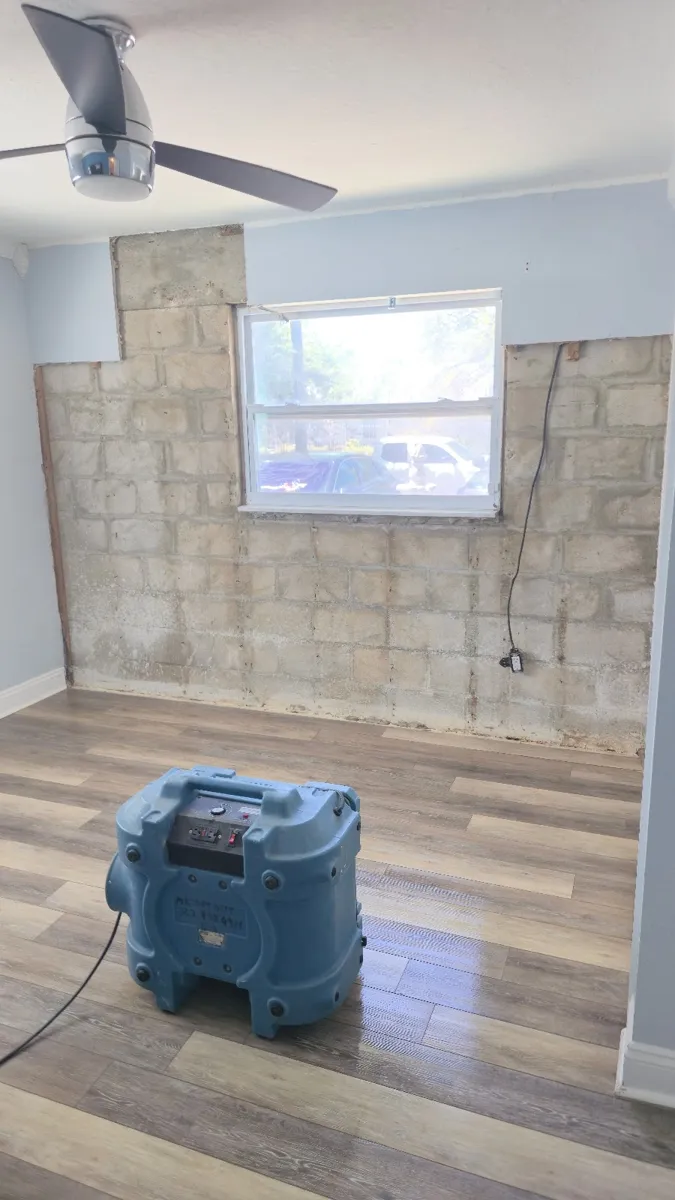
Repairs after the drying are often priced separately, by the room and by the material. These are national figures from the same two guides.
- Bathroom: up to about $3,000 for restoration (Bob Vila). A bathroom floor is a common one: a toilet seal or supply line leaks for weeks, and the subfloor under the tile is wet long before anything shows.
- Basement or slab-level flooding: $500 to $1,500 for an inch of clean water, and $2,800 or more for deep black water (Bob Vila). Fixr puts drying a 500 square foot basement at $2,000 to $7,000 before repairs.
- Drywall: $1.50 to $3 per square foot to repair.
- Carpet: $4.75 to $10.50 per square foot (Fixr), depending on whether it is dried, cleaned or replaced.
- Hardwood: $10 to $15 per square foot.
- Ceilings: $350 to $1,250 to repair (Bob Vila).
So how much does it cost to repair a bathroom floor caused by water damage? Using those figures, a small bathroom where the subfloor can be dried in place sits at the low end. One where the tile and subfloor both have to come out moves toward the $3,000 mark, before new tile.
What Does Water Damage Restoration Include?
A full restoration job covers everything from the first call until the structure is dry and safe to rebuild. In order:
- Stopping the source and making the area safe, including power to wet areas.
- Water extraction: pumping and vacuuming out standing water.
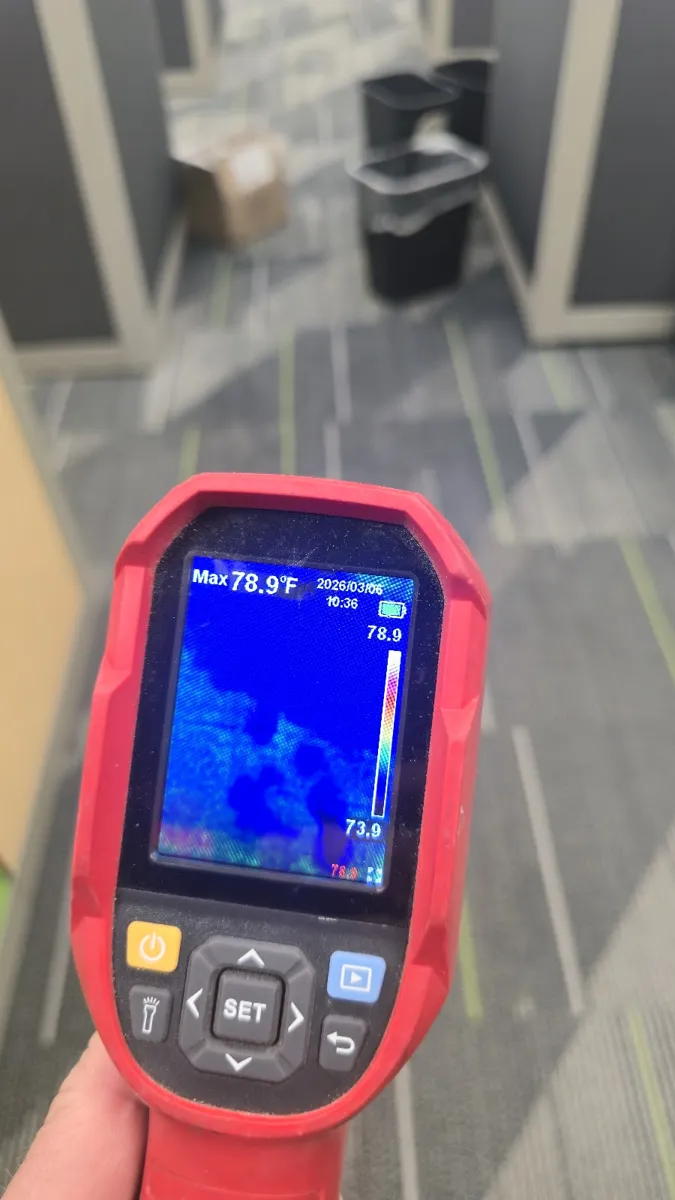
- Finding the moisture: meters and thermal imaging show how far water has traveled into walls, cabinets and subfloor.
- Removing what can't be saved: soaked drywall, insulation and padding, especially with gray or black water.
- Drying the structure: air movers and dehumidifiers, or heat drying, with readings every day until the materials test dry.
- Cleaning and mold prevention on the affected surfaces.
- Repairs: new drywall, flooring, paint and trim. Sometimes the same company does this; often it is a separate contractor and a separate bill.
When you compare quotes, check which of these steps each one covers. A low number that stops at extraction is not the same job as one that runs through drying and documentation.
Why Waiting Makes Water Damage Cost More
Time is the one cost driver you control. The EPA says to dry water-damaged areas and items within 24 to 48 hours to prevent mold growth. In a Florida house with the AC fighting summer humidity, that window is real.
Past it, three things happen. Drywall and cabinet bases that could have been dried start to swell and have to be replaced. Water that started clean is treated as dirtier the longer it sits. And mold adds a second job: Fixr puts mold cleanup at $4.75 to $5.50 per square foot on top of the water work, and our mold remediation cost guide covers what that runs in Florida.
Will Insurance Pay for Water Damage Restoration in Florida?
Often, when the water came from a sudden, accidental event like a burst pipe or an appliance failure. Bob Vila's guide notes that homeowners policies commonly cover that kind of loss, minus the deductible, while damage from a slow leak or neglect is often denied. Take photos and video of everything before cleanup starts.
Flood is the big exception. FEMA states plainly that most homeowners insurance does not cover flood damage. Rising water from outside, such as storm surge or a flooded street, needs a separate flood policy, and FEMA notes there is typically a 30-day waiting period before a new NFIP policy takes effect. That matters in Tampa Bay, where buying flood coverage once a storm is in the forecast is too late.
When the loss is covered, we photograph and document it, work directly with your adjuster and bill the claim, usually with no upfront cost to you. We can also help you decide whether a claim is worth filing.
How We Put a Price on a Water Job
We price water damage after we have seen it and measured it, because the ranges above are too wide to quote over the phone. These are the things that move the number:
- Where the water came from, which sets whether it is clean, gray or black water.
- How far it traveled. We map it with moisture meters and a thermal camera, because water runs under flooring and up inside walls well past the wet spot you can see.
- What can be dried in place. Our TES (Thermal Energy System) high-heat drying pulls moisture out of hardwood, tile and cabinetry that would otherwise be torn out. Less tear-out means a smaller repair bill afterward.
- What has to come out, such as soaked drywall, insulation and padding.
- How long the drying takes, confirmed with daily readings until the structure reads dry, not just dry to the touch.
- Whether mold has started. We are licensed by the Florida Department of Business and Professional Regulation to remediate mold, so it is handled as part of the same job.
When to Call for Water Damage Restoration in Tampa Bay
Call as soon as the water is stopped, and before you start pulling up flooring yourself. The earlier drying starts, the smaller the bill. We answer 24/7, extract the water on the first visit and keep drying until meter readings say the structure is dry.
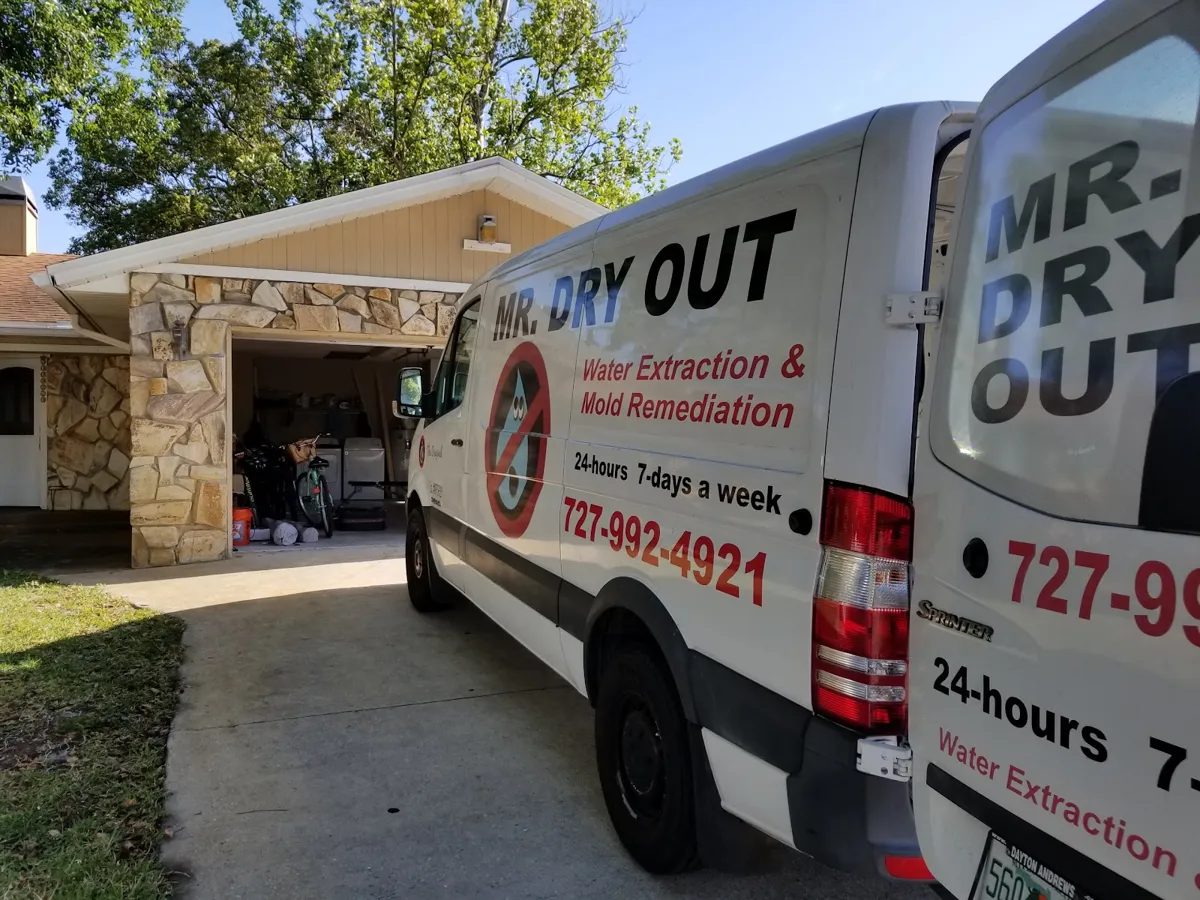
Mr. Dry Out is based in Hudson and has served Pasco, Pinellas, Hillsborough and Hernando counties since 2004, including Bayonet Point, Shady Hills, Madeira Beach, Clearwater, Largo and Tampa. For a quote on your home, see our water damage restoration service or call us any time.
Water Damage Restoration Cost FAQ
Most homes pay between about $1,200 and $5,000, with a national average near $3,000 (Fixr, 2025). Small clean-water leaks can run a few hundred dollars; long-standing flood water can run past $20,000.
Fixr puts water extraction at $3.75 to $4.25 per square foot for clean water, $4.10 to $6.50 for gray water and $7 to $7.50 for black water. Repairs to drywall, flooring and ceilings are priced on top.
Stopping the source, extracting the water, finding hidden moisture with meters and thermal imaging, removing what can't be saved, drying the structure until it tests dry, and cleaning to prevent mold. Rebuild work is often a separate bill.
Often, when the water came from a sudden event like a burst pipe or appliance failure. Slow leaks are often denied, and FEMA notes most homeowners policies do not cover flood. When a loss is covered, we work with your adjuster and bill the claim directly.
It is equipment and labor running for days, plus the materials that have to come out. Labor runs about $70 to $200 an hour nationally, and every day of delay lets water soak further into drywall, cabinets and subfloor.
Stop the water, photograph everything, and get drying started fast. The EPA says to dry water-damaged areas within 24 to 48 hours to prevent mold, and materials dried early can often be saved instead of replaced.