
Drying wet carpet is a race against the clock: the EPA's target is to dry it within 24 to 48 hours, before mold has a chance to start. Carpet soaked by clean water and dried in that window can often be saved. The pad underneath usually can't, and carpet soaked by sewage or outside flood water has to go. This guide covers how to tell which situation you are in, the drying steps that work, and when to call for professional carpet drying.
From the EPA's Water Damage: Cleanup and Mold Prevention table and the CDC's Guidelines for Cleaning Safely After a Disaster (reviewed August 26, 2026).
Can a Soaking Wet Carpet Be Saved?
Often, yes. Whether it can comes down to two things: how clean the water was and how fast drying starts. The EPA's guidance for carpet and backing soaked by clean water is to dry it within 24 to 48 hours by removing the water with an extraction vacuum, lowering the humidity with a dehumidifier and speeding things up with fans. It adds that the subfloor under the carpet must also be cleaned and dried.
Past that window, or with dirty water, the answer changes. The EPA notes that materials wet for more than 48 hours should be handled under its mold guidelines, and that even materials dried within 48 hours may have started to grow mold. In a Tampa Bay house in summer, with humid air and the AC off or struggling, two days goes fast.
First, What Kind of Water Was It?
The source of the water decides whether the carpet is worth drying at all. Before you start, work out which of these you have.
| Situation | Common sources | Carpet | Pad |
|---|---|---|---|
| Clean water, drying starts within 24 to 48 hours | Burst supply line, water heater, overflowing sink or tub, AC drain line | Often saved: extract, dry, clean | Usually replaced |
| Clean water, wet longer than 48 hours | A slow leak nobody saw, a house that was empty | Judged by smell, stains and mold; often replaced | Replaced |
| Sewage or outside flood water | Toilet overflow with waste, sewer backup, storm surge, flooded street | Thrown out | Thrown out |
The CDC's advice after a flood is to "throw away anything that you can't clean or dry quickly", and it names carpeting, carpet padding and rugs. The EPA's table also warns not to run fans before you know the water is clean, because fans spread whatever is in it. Contaminated water calls for protective gear and containment, which is work for a crew, not a homeowner.
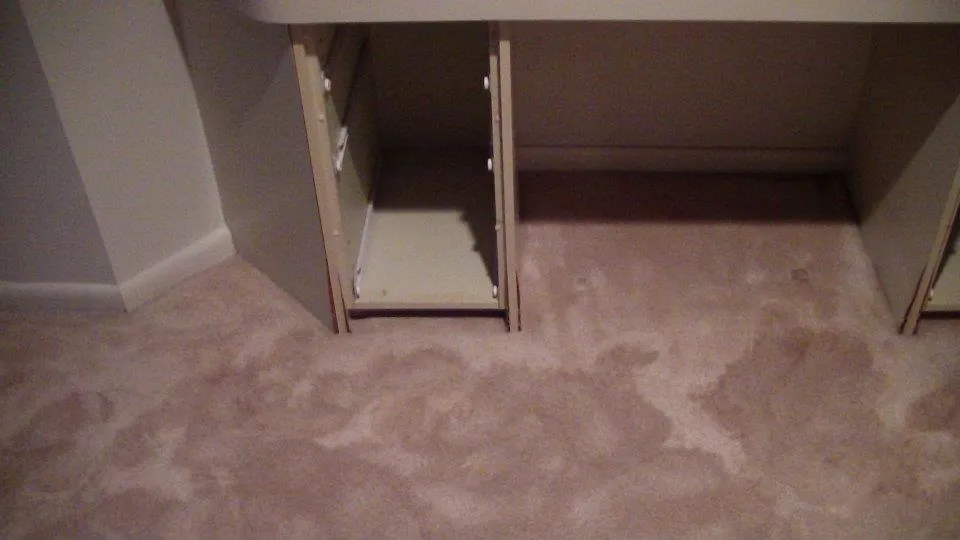
How to Dry Wet Carpet Quickly
For clean water, these are the steps in order. If the water is dirty, skip to the last section and call.
- Stop the water and make it safe. Shut off the supply or the appliance. Keep cords and power strips off the wet floor, and turn off power to the room at the breaker if water is near outlets.
- Photograph everything. Wide shots and close-ups of the carpet, the walls and the source, before anything is moved. If you file an insurance claim, these are your record.
- Get the furniture off. Move it out, or put foil or plastic blocks under the legs so wood stain and rust don't transfer into the wet carpet.
- Extract, don't just blot. A wet vacuum pulls far more water out than towels. Go over the area slowly, in overlapping passes, until little comes up.
- Lift a corner. Pull the carpet up off the tack strip at the wettest corner so air can get under it. Wear gloves: tack strips are sharp.
- Pull out the soaked pad. The pad holds most of the water. Cut out the wet section, bag it and let the subfloor see air.
- Move the air and dry it. Point fans or air movers under the lifted carpet and across the surface, and run a dehumidifier in the room with the doors closed. Keep the AC running. The EPA advises keeping indoor humidity below 60 percent.
- Check before you call it dry. Feel the back of the carpet and the subfloor, not just the top, and smell for mustiness. A moisture meter is the real test.
The Pad and the Subfloor
Most failed carpet drying is about what is under the carpet. The pad, whether foam or jute, holds far more water than the carpet and dries far more slowly, which is why it is almost always replaced after a real soaking. Replacing a pad costs much less than replacing the whole carpet, so pulling the pad is usually how the carpet gets saved.
Under the pad is the subfloor. That may be a concrete slab or a plywood or OSB subfloor. Both have to dry before new pad goes down.
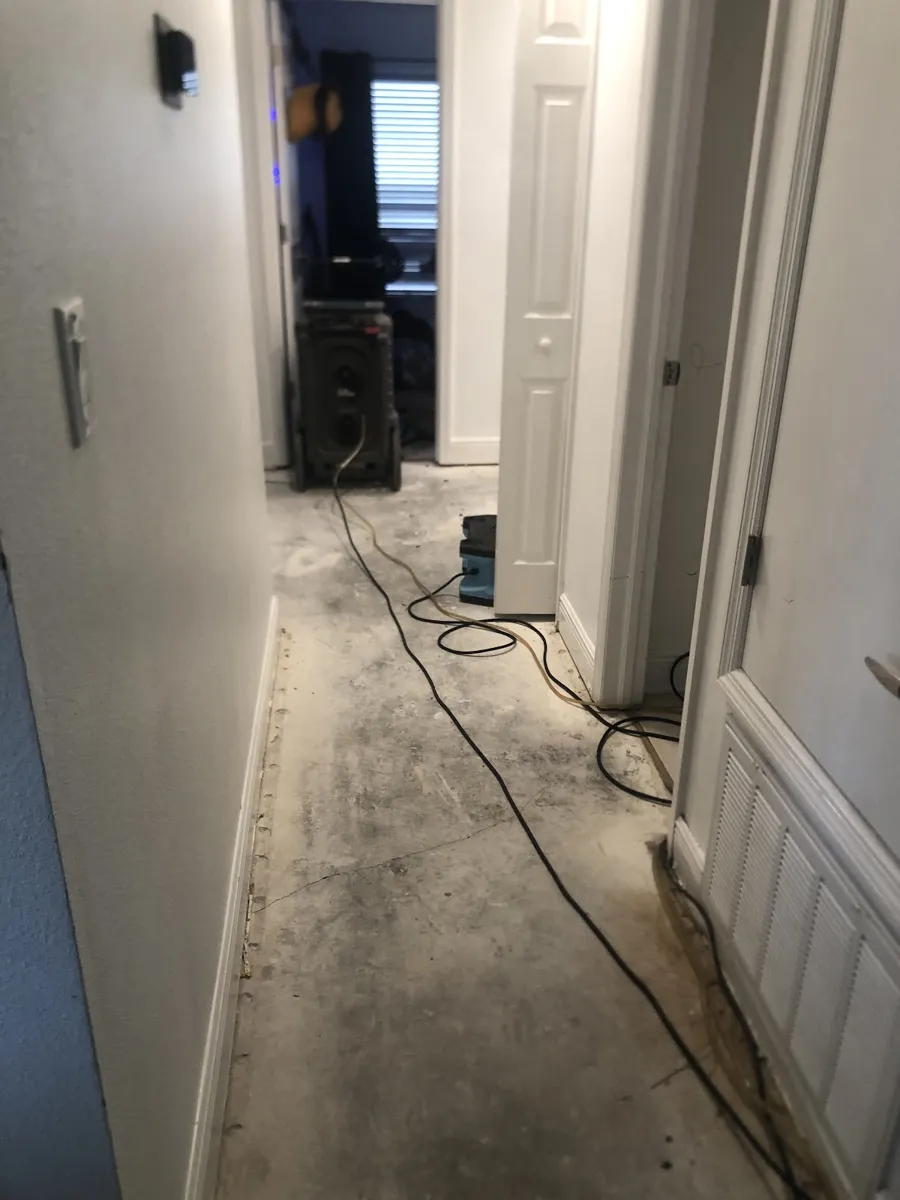
The EPA's guidance for concrete is to remove the water with an extraction vacuum and dry it with dehumidifiers, fans or heaters. Wet wood subfloor that stays wet can grow mold and soften, which our mold remediation on wood guide covers. The tack strips are wood too, and they get wet with everything else.
Mistakes That Make It Worse
- Waiting for it to air-dry. The top of the carpet can feel dry in a day or two while the pad and slab under it stay wet for much longer. That is where the smell and the mold come from.
- Using a household vacuum. It is not built for water, and it is an electrical hazard.
- Covering the smell. Baking soda and carpet fresheners mask odor on the surface. They do nothing about water in the pad and floor, and a smell that comes back is a sign the floor is still wet.
- Steam cleaning a carpet that is still wet. It adds more water. Dry first, clean after.
- Laying new pad on a damp slab or subfloor. It traps the moisture under a new floor.
- Opening the windows on a humid day. On a muggy day the outdoor air can carry more moisture than the air in an air-conditioned house. A dehumidifier and the AC do more.
How We Dry Carpet
When we get to wet carpet after a clean-water loss caught early, we can often save it. We extract deeply, lift and float the carpet off the tack strips, and dry both the carpet and the subfloor with air movers and heat. The pad is usually replaced. We place equipment based on the size of the loss, take moisture readings every day, and keep drying until the materials read dry to standard, not just dry to the touch.
If the water was contaminated, from sewage or flooding, the carpet and pad generally have to go, and we will tell you honestly which it is. Either way, we dry the subfloor and tack strips completely, so new carpet is not laid over hidden moisture. When the water came from a covered loss, we document the job and bill your insurance directly. If you want to handle a small job yourself, we also rent dehumidifiers, fans and air movers through our dry equipment rental service.
When to Call for Carpet Drying
Call when more than one room is wet, when the water came from a toilet, a sewer line or outside, when you can't get the pad out, when the carpet has been wet for more than a day, or when it still smells after you thought it was dry. Wet carpet that spread from a bathroom or kitchen often means wet drywall and cabinet bases too, which is a water extraction and structural drying job, and our water damage restoration cost guide covers what those run.
Mr. Dry Out answers 24/7 across Pasco, Pinellas, Hillsborough and Hernando counties, including Hudson, Port Richey, Wesley Chapel, Largo, St. Petersburg and Tampa. See our carpet drying service, or call us now and we will tell you whether your carpet is worth saving.
Drying Wet Carpet FAQ
Often, if the water was clean and drying starts within a day or two. The carpet itself can usually be dried in place or lifted and dried. The pad underneath holds much more water and is usually replaced. Carpet soaked by sewage or outside flood water is thrown out.
The EPA's target is within 24 to 48 hours, and that is about how long you have before mold becomes a risk. With extraction, air movers and a dehumidifier, the carpet itself can dry in that time. The subfloor underneath has to dry too, and that is measured with a moisture meter.
The top may, but the pad and the subfloor under it stay wet much longer, especially in a humid Florida house. That hidden moisture is what causes the smell, the mold and the stains that come back. Don't leave a soaked carpet to air-dry.
No. Baking soda can help with odor on a carpet that is already dry, but it does not pull water out of the pad or the floor. Extract the water first, then dry with moving air and a dehumidifier.
You can lift a corner off the tack strip to let air under it and to pull out a soaked pad, wearing gloves. If the water came from a toilet, a sewer backup or outside flooding, leave it to a crew with protective gear.
Yes. We rent dehumidifiers, fans and air movers, and air scrubbers. See our dry equipment rental page, or call for a quote and delivery and pickup options.