
Mold remediation on wood comes down to two questions: is the wood still sound, and can it be dried all the way through? Sound wood with mold on it can usually be cleaned and kept, while wood that has gone soft after months of a leak has to come out, and either way the mold returns if the wood stays wet. This guide covers how mold is cleaned off framing, subfloor and finished wood, what the EPA recommends by size of the job, and when it is time to call a licensed mold remediation crew.
From the EPA's Guidelines for Remediating Building Materials with Mold Growth (Table 2 of its mold remediation guide) and A Brief Guide to Mold, Moisture and Your Home (updated February 18, 2026).
Why Mold Grows on Wood
Wood is food for mold. Studs, plywood, OSB subfloor, roof sheathing, cabinet boxes and baseboards are all made of plant fiber, and mold only needs moisture on top of that to start growing. In a Tampa Bay home, the moisture usually comes from inside: a supply line or drain under a sink, a toilet seal, a water heater, an AC drain line that backs up, or a roof or window leak that wets the framing below it.
Raw wood is porous, so mold on bare framing is not only on the surface. That is why the EPA's guidance treats wood as something to clean, dry and then vacuum, rather than something you can wipe once and walk away from. Finished wood, like a sealed cabinet face or a varnished floor, is easier: the finish keeps most of the growth on the surface.
Surface Mold or Rot? Check the Wood First
Before deciding how to clean it, find out whether the wood is still doing its job. Push a screwdriver into the stained area and into a clean area nearby and compare.
- Hard and the same as the clean wood: the mold is on or near the surface. The wood can usually be cleaned, dried and kept, even if a stain remains.
- Soft, spongy or crumbling: the wood has been wet long enough to break down. It has to be cut out and replaced, and the moisture source is almost certainly still active.
- Wet to the touch or dark and damp: stop. Cleaning wet wood smears mold around, and it will grow back while the wood stays wet. Dry it first.
The EPA notes that in a long-term roof leak, molds can weaken floors and walls as they feed on wet wood, and that if you suspect mold has damaged the structure you should have a structural engineer or other qualified professional look at it. A sagging subfloor or a stud that moves when you push it is that kind of situation.
What the EPA Says, by Size of the Job
The EPA's remediation guide sorts mold jobs by how much surface is affected, and lists the cleanup methods, protective gear and containment for each size. These are its rows for wood surfaces.
| Area affected | Cleanup methods | Protective gear | Containment |
|---|---|---|---|
| Small (under 10 sq ft) | Wet vacuum, damp wipe, HEPA vacuum | N-95 respirator, gloves, goggles | None required |
| Medium (10 to 100 sq ft) | Wet vacuum, damp wipe, HEPA vacuum | Limited or full, by professional judgment | Limited, by professional judgment |
| Large (over 100 sq ft) | The same three, plus removing and discarding damaged wood | Full, by professional judgment | Full, by professional judgment |
Source: EPA, Mold Remediation in Schools and Commercial Buildings, Table 2. The EPA defines the methods this way: a wet vacuum only while material is still wet, a damp wipe "with plain water or with water and detergent solution (except wood, use wood floor cleaner)", and a HEPA vacuum "after the material has been thoroughly dried". Limited containment means plastic sheeting from floor to ceiling with the area under negative air pressure through a HEPA-filtered fan.
Florida uses the same 10 square foot line in law. Under section 468.8411, Florida Statutes, mold remediation means treating mold or mold-contaminated material "of greater than 10 square feet", and a company that does that work for others needs a state mold remediator license. Our DIY mold remediation guide covers what a homeowner can do on their own property.
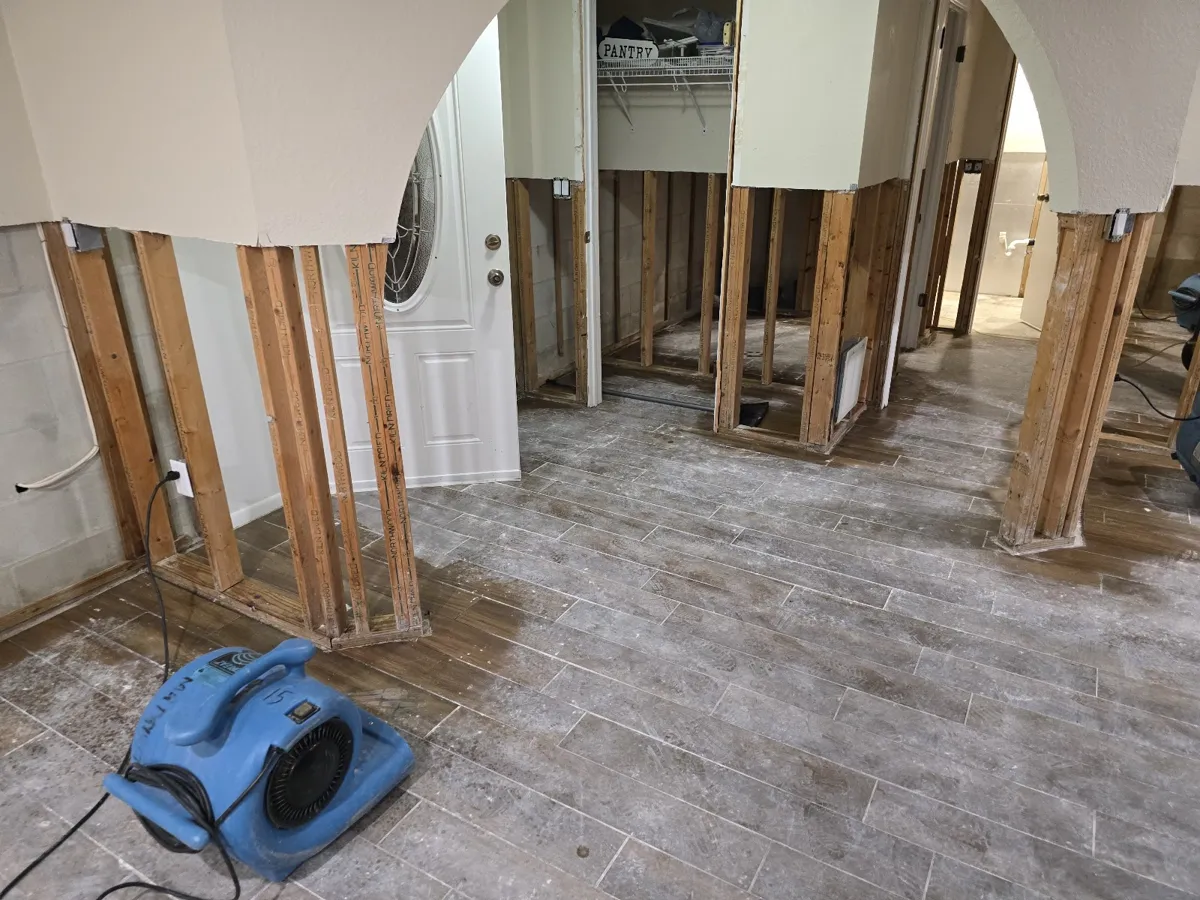
Mold Remediation on Wood, Step by Step
This is the order the work follows, whether it is a small patch you are handling yourself or a job our crew is doing under containment.
- Find and stop the water. Mold on wood is a symptom. Fix the leak, the drain line or the roof first, or everything after this is temporary.
- Protect yourself and the rest of the house. Gloves, goggles and an N-95 at minimum. On anything bigger than a small patch, close the area off with plastic and keep air from the room from reaching the rest of the house.
- Open up what is hiding the wood. Wet drywall, insulation and carpet pad come out, because they hold water against the wood and cannot be cleaned. That exposes the full extent of the growth.
- Dry the wood. Air movers, a dehumidifier and, on our jobs, heat. The EPA's wood guidance says to remove moisture immediately and use dehumidifiers, gentle heat and fans, and to take care when applying heat to hardwood floors.
- Clean the surface. Damp-wipe with a wood cleaner and scrub as needed. Do not soak the wood again.
- HEPA-vacuum. Once the wood is dry, vacuum it and the surrounding area with a true HEPA vacuum to pick up loose spores and fragments. A household vacuum blows them back into the room.
- Remove what cannot be saved. Soft or crumbling wood is cut out and replaced. On large jobs, damaged material is bagged inside the containment before it is carried out.
- Confirm it is dry before closing up. New drywall over damp studs restarts the problem. A moisture meter, not your hand, decides when the wall can be closed.
Framing, Subfloor and Finished Wood
Not all wood in a house is treated the same way.
- Wall studs and framing: the most common place we find it, behind drywall after a leak or a flood. Framing is structure, so it stays when it is sound: the drywall and insulation come out, the studs are dried, cleaned and HEPA-vacuumed. Our mold in walls page covers how we find this growth before it shows.
- Subfloor: plywood or OSB under carpet, tile or vinyl. Water that runs under flooring sits on it for weeks before anyone sees it. If the subfloor is still firm, it is dried in place and cleaned. If it has delaminated or gone soft, that section is replaced. See floor drying for how we dry under tile and hardwood.
- Roof sheathing in the attic: the same approach, usually after a roof leak or poor attic ventilation. The roof leak has to be fixed by a roofer before cleanup.
- Finished wood (cabinets, trim, furniture, hardwood floors): the EPA says treated or finished wood surfaces may be cleaned with mild detergent and clean water and allowed to dry. Wet wood paneling should be pried away from the wall so the back can dry. Cabinet boxes under a sink are often particleboard rather than solid wood, and particleboard swells when it gets wet.
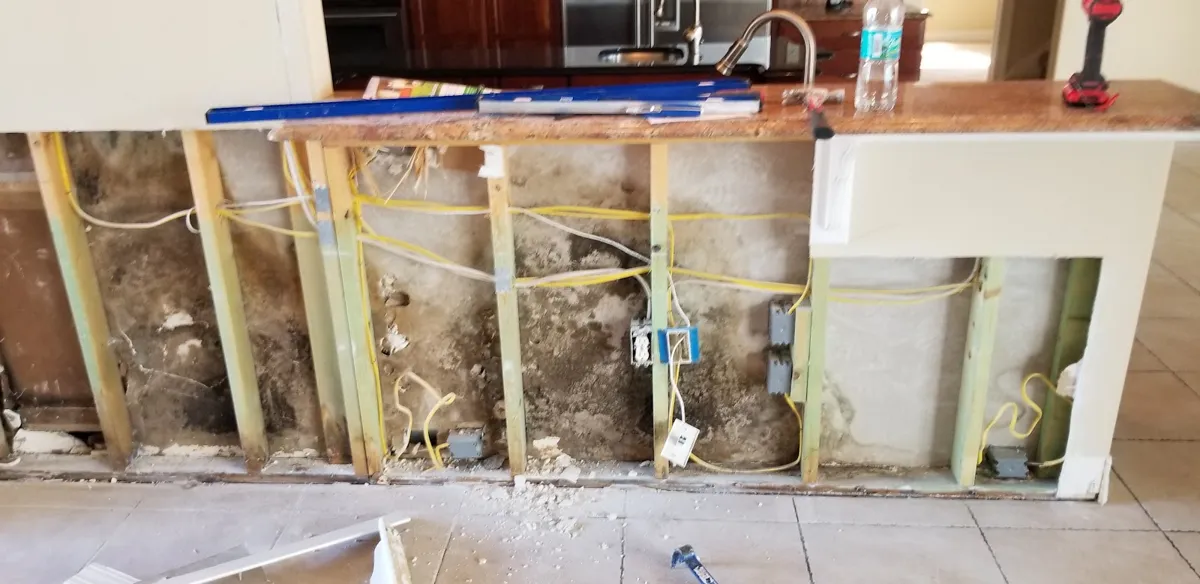
Bleach, Vinegar and Paint
Most mold-on-wood advice online starts with a spray bottle. The EPA's advice runs the other way. Its remediation guide says the purpose is "to remove the mold", that "it is necessary to clean up mold contamination, not just to kill the mold", because dead mold is still allergenic, and that using a biocide such as chlorine bleach "is not recommended as a routine practice during mold remediation". If you do use one, ventilate the area and never mix bleach with cleaners that contain ammonia.
On raw wood there is a practical problem too: a spray puts more water into the wood, which is the thing mold needs. Scrubbing and HEPA vacuuming a dry surface removes more than soaking it.
Paint is not a fix either. The EPA is direct: "Don't paint or caulk moldy surfaces; clean and dry surfaces before painting. Paint applied over moldy surfaces is likely to peel." Stain-blocking primers have a place, after the wood is clean and dry, to cover a stain that remains. They do not make wet wood safe to close up.
Also expect some staining to stay. The EPA notes that molds gradually destroy the things they grow on, so cleaning will not always restore the original look. A stain on sound, dry, clean framing is cosmetic.
Drying Is What Stops It Coming Back
Every step above depends on the wood ending up dry, and dry means dry inside, not dry to the touch. The EPA says materials dried within 24 to 48 hours of a leak in most cases will not grow mold, and advises keeping indoor relative humidity below 60 percent, ideally between 30 and 50 percent. In a closed-up Florida house in summer, wet framing in a wall cavity does not get there on its own.
That is where most mold-on-wood jobs fail: the visible mold gets cleaned, the wall gets closed, and the studs behind it were still wet. On our jobs, the TES (Thermal Energy System) drives controlled high heat into the wet structure, and we take moisture readings every day until the materials read dry, not just dry to the touch. Because we are a water damage company as well as a licensed mold remediator, the same crew handles the leak, the drying and the mold, so nobody treats mold on wood that is still wet.
When to Call a Mold Remediation Company
Call a licensed remediator when the mold on wood covers more than about 10 square feet, sits inside a wall, under a floor or in the attic, followed a leak or flood, keeps coming back after you clean it, or when anyone in the house has asthma or a weakened immune system. Call as well if you are not sure whether the wood is still sound.
Mr. Dry Out is licensed by the Florida Department of Business and Professional Regulation to remediate mold and has worked across Pasco, Pinellas, Hillsborough and Hernando counties since 2004, including Hudson, New Port Richey, Spring Hill, Land O' Lakes, Clearwater and Tampa. When the mold came from a covered water loss, we document the job and bill your insurance directly. For what a job typically runs, see our mold remediation cost guide, or read more about our mold remediation service and call us any time.
Mold on Wood FAQ
Usually, yes. Mold on sealed or finished wood wipes off, and mold on framing and subfloor can be cleaned and HEPA-vacuumed once the wood is dry. Wood that is soft, crumbling or has lost strength after a long leak is replaced instead.
The EPA does not recommend bleach or other biocides as a routine step in mold cleanup. The goal is to remove the mold, not just kill it, because dead mold can still cause allergic reactions. For wood, the EPA lists damp-wiping with wood floor cleaner and HEPA vacuuming once the wood is dry.
When it has lost strength. The EPA notes that mold feeding on wet wood during a long-term leak can weaken floors and walls, and that suspected damage to the structure should be checked by a structural engineer. Stained but sound wood can usually stay once it is cleaned and dried.
No. The EPA says not to paint or caulk moldy surfaces, because paint over mold is likely to peel. Clean the wood, dry it, and only then seal or paint it.
The EPA's line is about 10 square feet, a patch roughly 3 feet by 3 feet. Under that, a homeowner with gloves, goggles and an N-95 can usually clean it. Over that, or inside a wall or under a floor, the job calls for containment and air filtering.
Fix the water and dry the wood all the way through, not just on the surface. We take moisture readings until the wood reads dry, and the EPA advises keeping indoor humidity below 60 percent.