
Attic mold remediation starts with a question most people skip: where is the water coming from? Mold in an attic grows on the roof decking, the rafters and the insulation, and it only grows there because something keeps them damp. In Florida homes that is usually a roof leak, a bathroom fan venting into the attic, or the AC equipment and ductwork up there.
This guide covers the signs to look for, the causes behind them, and what the remediation involves, from fixing the source to new insulation. For the full process, see our mold remediation service.
From the EPA's Water Damage: Cleanup and Mold Prevention and Mold Remediation Guidelines tables, and A Brief Guide to Mold, Moisture and Your Home (updated February 18, 2026).
Signs of Mold in the Attic
Most attic mold is found by accident, during a roof inspection, an AC service call or a trip up for the holiday decorations. These are the signs worth looking for, from the living space and from the attic itself.
- A musty smell near the attic hatch, in closets on the top floor, or when the AC first kicks on.
- Ceiling stains below the attic, especially brown rings or spreading discoloration near outside walls, around light fixtures or under the bathroom fan.
- Dark spotting or staining on the underside of the roof decking and on the rafters. It is often heaviest in one area, which points at the source.
- Wet, matted or stained insulation. Insulation that has been soaked flattens and discolors, and it holds water against the drywall below it.
- Water marks or rust around the air handler and its drain pan, or ducts that are wet on the outside.
- Daylight or water trails around roof penetrations: plumbing vents, the chimney or flue, and skylights.
Look with a flashlight and step only on the framing, never on the drywall between it. If you see more than a small patch, don't disturb it. Dry mold is easy to knock loose, and the attic sits right above the bedrooms.
What Causes Attic Mold in Florida Homes
Mold needs moisture, and in an attic there are three places it usually comes from. Which one you have decides the fix, so it matters more than the mold itself.
| Cause | What it looks like | What fixes the source |
|---|---|---|
| Roof leak | Growth concentrated below one spot, often a valley, a vent boot or flashing; wet insulation and a ceiling stain underneath | Roof repair by a licensed roofer, then drying |
| Bathroom or kitchen fan venting into the attic | Growth on the decking right around the fan or the end of its duct | Duct the fan to the outdoors |
| AC air handler and ducts in the attic | Growth and water marks around the air handler, the drain pan or sweating ducts | AC service: drain line, pan, duct sealing and insulation |
Roof leaks are the obvious one, and in Tampa Bay they often follow a storm. A small leak can wet the decking and insulation for months before a ceiling stain shows. The EPA notes that a long-term roof leak can let mold weaken the wood it feeds on.
Bathroom fans are the one people don't expect. A fan that blows into the attic, or into a soffit vent, puts warm, wet shower air straight into the attic, where it settles on the roof decking and insulation. The Florida Building Commission ruled in 2008 that the state's residential code does not allow a bathroom exhaust vent to end in a vented attic, or to be aimed at a soffit, eave or ridge vent. Older homes and quick remodels still have them.
AC equipment in the attic is the third. Many Florida homes keep the air handler and ducts up there, and condensation is part of how an AC works. A clogged drain line, a rusted drain pan or ducts that sweat keep the area around the air handler wet, and that is one of the places we see mold most often.
What Attic Mold Remediation Involves
Attic jobs follow the same order as any mold job. The difference is the space: it is hot, cramped and directly above the living areas, so containment matters more, not less.
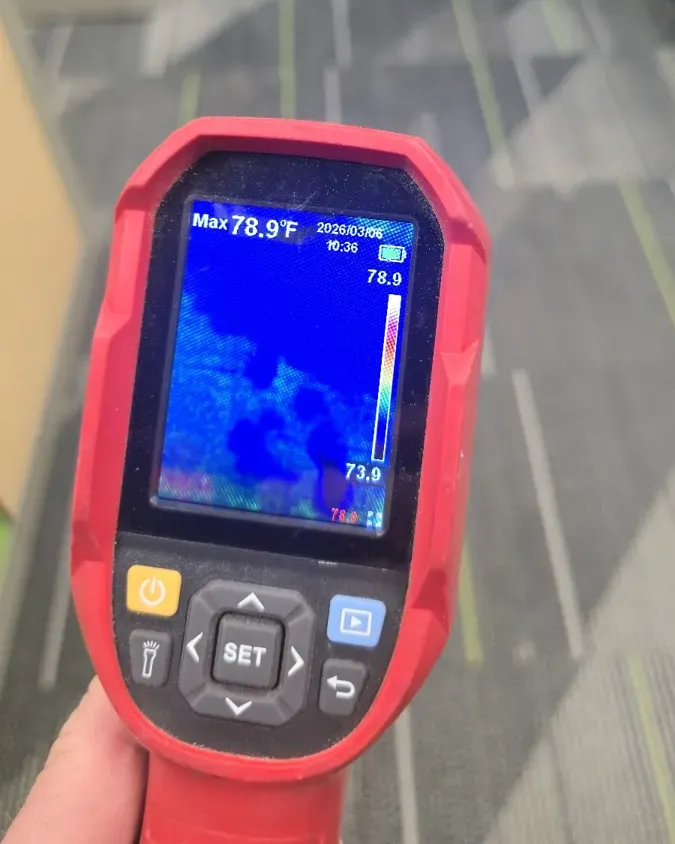
- Find the moisture source. We trace it with moisture meters before anything is opened up. If it is the roof or the AC, that trade has to fix it; we tell you which one and why.
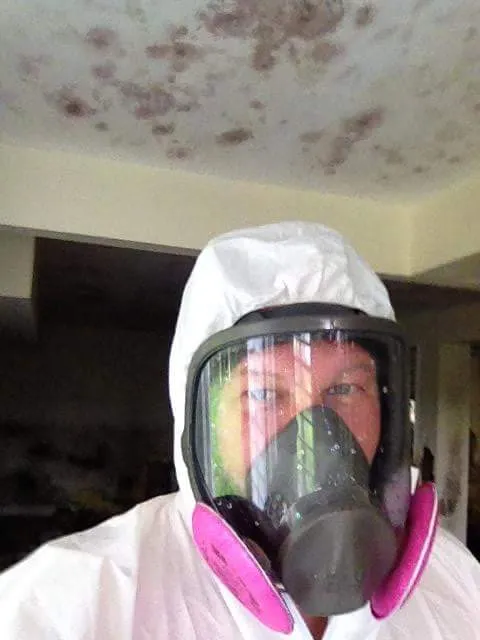
- Contain the area. Plastic containment and negative air keep spores from dropping into the house through the hatch, the light fixtures and the ceiling while the work is done.
- Remove contaminated material. Wet or moldy insulation comes out and is bagged. Decking and rafters that are sound stay.
- Clean the wood and filter the air. Decking and rafters are cleaned and HEPA-vacuumed, HEPA filtration runs during and after removal, and surfaces are treated with antimicrobial.
- Dry the structure. Our TES (Thermal Energy System) drives controlled high heat into wet wood, with daily moisture readings until it reads dry, not just dry to the touch.
- Put it back. New insulation goes in only after the source is fixed and the wood reads dry.
Insulation and Roof Decking
Insulation: the EPA's guidance for water-damaged material is blunt. Both fiberglass and cellulose insulation that has been soaked should be discarded and replaced. Insulation that is dry and clean, away from the affected area, can stay. Blown-in insulation over a large area makes this the messiest part of the job, and the main reason containment matters.
Roof decking and rafters: these are wood, and the EPA treats wood as something to clean and keep when it is sound. Its guidelines for wood surfaces are a wet vacuum while wet, a damp wipe with a wood cleaner, and a HEPA vacuum once the wood is dry, with damaged material removed on large jobs.
Staining often remains after cleaning, which is cosmetic on sound wood. Decking that has gone soft from a long leak is a roofing repair. Our guide to mold remediation on wood goes into how wood is cleaned and when it has to be replaced.
What doesn't work: spraying the decking and leaving. The EPA says the purpose of remediation is to remove the mold, not just kill it, because dead mold is still allergenic, and that bleach and other biocides are not recommended as a routine practice. Paint or encapsulant over mold that hasn't been cleaned, on wood that is still damp, is the same mistake with a nicer finish.
Can You Clean Attic Mold Yourself?
A small patch, under about 10 square feet on dry wood, is within the EPA's homeowner range, with gloves, goggles and an N-95. Our DIY mold remediation guide covers how. Attic mold is often bigger than it looks from the hatch, though, and the job is overhead, in heat, on framing with drywall between your feet.
Florida uses the 10 square foot line in law too. Under section 468.8411, Florida Statutes, mold remediation means treating mold or mold-contaminated material "of greater than 10 square feet", and a company that does it for others needs a state mold remediator license. Ask to see it.
Will Insurance Cover Attic Mold?
It depends on where the water came from. Mold that followed a sudden, covered water loss is often covered, while mold from long-term humidity, a slow leak or a fan that has vented into the attic for years is usually excluded. We document every step and bill your insurance directly when the mold came from a covered loss, and we will tell you plainly which one you are looking at. For what remediation runs when insurance isn't paying, see our mold remediation cost guide.
When to Call for Attic Mold Remediation
Call when the growth covers more than a small patch, when insulation is wet, when there is a ceiling stain under it, when the attic smells musty from inside the house, or when anyone at home has asthma or allergies. Because we are a water damage company as well as a licensed mold remediator, one crew handles the drying and the mold, so nobody treats mold on decking that is still wet.
Mr. Dry Out is licensed by the Florida Department of Business and Professional Regulation to remediate mold and works out of Hudson across Pasco, Pinellas, Hillsborough and Hernando counties, including Hudson, Holiday, Trinity, Tarpon Springs, Dunedin and Brooksville. See our mold remediation service or call us any time.
Attic Mold Remediation FAQ
Usually dark gray, black or greenish spotting or staining on the underside of the roof decking and on the rafters, often heaviest near a leak, a vent or the bathroom fan. Wet, matted or stained insulation and a musty smell near the attic hatch are the other common signs.
It can be. Many molds release allergens and, in some cases, mycotoxins that can trigger respiratory problems and allergic reactions, especially for children, older adults and anyone with asthma.
A small patch, under about 10 square feet, on dry wood can be cleaned by a homeowner with gloves, goggles and an N-95. Attic mold often covers more than that, and working overhead in a hot, cramped attic makes it hard to do safely. Larger jobs need containment and HEPA filtration.
Wet insulation does. The EPA's guidance is to discard and replace both fiberglass and cellulose insulation that has been soaked. New insulation goes in only after the source is fixed and the decking reads dry.
No. A new roof stops one source of water, but the mold already on the decking and rafters stays until it is cleaned. If the cause was a bathroom fan or the AC, a new roof does nothing for it.
Often, when the mold came from a sudden, covered water loss. Mold from long-term humidity or a slow leak is usually excluded. When it is covered, we document the job and bill the claim directly.