
What kills mold? Vinegar kills some of it, bleach kills what it reaches on a hard surface, and UV light kills very little of it in a real house.
But killing mold is the wrong goal. The EPA says it is not enough to kill mold, it has to be removed, because dead mold can still cause allergic reactions. And none of these products touches the reason it grew: water.
This guide goes through the common answers one at a time, with what the research and the health agencies say about each, and then what actually keeps mold from coming back in a humid Florida home. If you are past the spray-bottle stage, see our mold removal service.
From the EPA's A Brief Guide to Mold, Moisture and Your Home (updated February 18, 2026) and a 2015 study of five cleaning agents in the International Journal of Environmental Research and Public Health.
Killing Mold vs. Removing It
Most "what kills mold" advice treats mold like germs on a countertop: spray, wait, wipe. Health agencies frame it differently. The EPA's guidance is that "it is not enough to simply kill the mold, it must also be removed," because dead mold may still cause allergic reactions in some people. The Florida Department of Health says the same thing in plainer words: "The goal should be to remove mold growth by cleaning or removing moldy materials," and "Dead mold can still pose health risks if you are exposed."
That changes what a good product is. On a hard surface, the thing that matters most is the scrubbing that lifts the growth off, and the drying afterwards. The EPA's own first choice is not a disinfectant at all: "Scrub mold off hard surfaces with detergent and water, and dry completely."
It also explains why spraying something into drywall, carpet or insulation rarely ends the problem. Mold grows into porous material. The EPA notes that absorbent materials such as ceiling tiles and carpet may have to be thrown away once they are moldy, because there is no surface to scrub.
What Kills Mold: The Common Options Compared
Here is how the usual answers stack up against what the sources actually say. "Works" here means on a small patch on a hard surface, the job a homeowner can reasonably take on.
| Option | What the evidence says | Best use |
|---|---|---|
| Detergent and water | The EPA's recommended method for hard surfaces: scrub, then dry completely | Small patches on tile, sealed wood, plastic, metal |
| White vinegar (about 4% acetic acid) | Inhibited one common indoor mold (Penicillium) but not another (Aspergillus) in a 2015 lab study | Light cleaning; not a cure for an active problem |
| Chlorine bleach | Not recommended as a routine practice by the EPA; Florida's health department says it is not needed in most cases | Special cases on non-porous surfaces, ventilated, never mixed with ammonia |
| 70% rubbing alcohol (ethanol) | No inhibitory effect on either mold in the same 2015 study | Not a mold treatment |
| Home UV lamps | The EPA says typical home units provide little, if any, reduction in mold spores | Not a substitute for cleaning |
| Paint or caulk over it | The EPA: "Do not paint or caulk moldy surfaces" | Never, until the surface is cleaned and dry |
Does Vinegar Kill Mold?
Partly. The best direct test we know of is a 2015 study from the University of Adelaide that compared five cleaning agents against two molds commonly found in indoor air, Aspergillus fumigatus and Penicillium chrysogenum. Household vinegar (4.0 to 4.2% acetic acid) inhibited the growth of the Penicillium, but not the Aspergillus. In the same test, 70% ethanol had no effect on either.
So vinegar kills some mold, under lab conditions, and not others. You can't tell which mold you have by looking at it, and most homes have more than one kind. Vinegar is fine for wiping down a shower corner. It is not a reason to leave a patch of mold on drywall in place, and it does nothing for the leak behind it.
Two practical notes. Vinegar is an acid, so never mix it with bleach: the Florida Department of Health warns that bleach mixed with acids or ammonia cleaners can form a dangerous chlorine gas. And a soaking spray adds water to the material you are trying to dry, which is the opposite of what mold control needs.
Does Bleach Kill Mold?
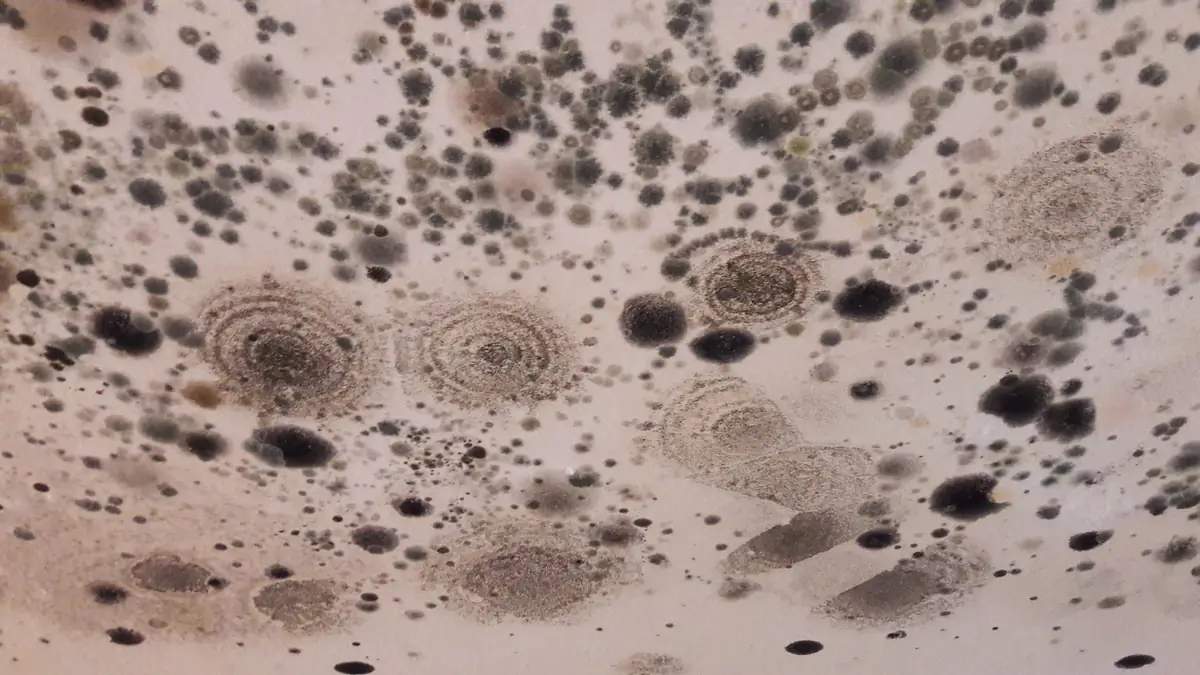
Bleach kills mold it can reach on a non-porous surface. That is the catch: on drywall, wood or grout, the growth is partly inside the material, and bleach is mostly water, so it can leave the material wetter than it started.
The agencies are cautious about it. The EPA says the use of a biocide such as chlorine bleach is "not recommended as a routine practice during mold cleanup," though there are cases where professional judgment calls for it, such as when people with weakened immune systems are in the home. The Florida Department of Health says "using bleach or other chemicals to kill indoor mold growth is not needed in most cases."
If you do use it, follow the label, open the windows and run a fan to the outdoors, and never mix it with cleaners that contain ammonia. For wood specifically, our guide to mold remediation on wood covers why scrubbing and HEPA vacuuming a dry surface beats soaking it.
Does UV Light Kill Mold?
Strong UV light can damage mold growing in its direct line, given enough time. A plug-in UV lamp or an air purifier with a UV bulb is a different story. The EPA's technical summary of residential air cleaners says a properly designed UV unit in an air stream can reduce the viability of growing bacteria and molds, but gives "little, if any, reduction in bacterial and mold spores," and that destroying airborne spores likely needs much higher UV exposure than a typical home unit provides.
Where UV does have a use is inside an air handler, shining on the cooling coil and drain pan, to limit growth on those constantly damp surfaces. The same EPA summary notes that some UV lamps can produce ozone. Either way, UV light does not reach mold behind drywall, under flooring or inside insulation, and it removes nothing.
What Kills Black Mold?
The same things that kill any other mold, and the same answer applies: remove it, don't just kill it. The EPA's mold course is direct that "black mold" is not a species or specific kind of mold, and neither is "toxic mold". Many molds are dark. The one people usually mean, Stachybotrys chartarum, is a greenish-black mold that the CDC says grows on high-cellulose material such as drywall, fiberboard and paper, and needs constant moisture to grow.
The CDC's advice is that all molds should be treated the same with respect to health risks and removal. In practice, dark growth across drywall usually means the drywall has been wet for a while, which is a job for containment and removal of the material, not a stronger spray.
What Kills Mold Permanently?
Nothing you can buy. The EPA puts it plainly: "It is impossible to get rid of all mold and mold spores indoors." Spores come in on the air and on clothes every day. What you can control is whether they find water to grow on, and the EPA's answer is that "indoor mold growth can and should be prevented or controlled by controlling moisture indoors."
In a Tampa Bay home that comes down to a short list:
- Fix leaks fast. Plumbing leaks, roof leaks and AC drain lines are the usual sources. The EPA says to dry water-damaged areas and items within 24 to 48 hours to prevent mold growth.
- Keep indoor humidity under 60%, ideally between 30 and 50%, per the EPA. In Florida the air conditioner does most of that work, so a system that short-cycles or a clogged drain line shows up as mold.
- Vent the bathroom and kitchen to the outdoors, and run the fan during and after showers.
- Don't close up anything wet. Painting, caulking or re-drywalling over damp material is how the same mold shows up again six months later.
That is also the honest answer to "what kills mold in the shower": clean it with detergent and water, dry the surface, and run the exhaust fan longer.
When Cleaning Isn't Enough
The EPA puts the do-it-yourself line at about 10 square feet, roughly a 3 by 3 foot patch, on a surface you can scrub. Our DIY mold remediation guide covers how to do that safely. Florida draws the same line in law: under section 468.8411, Florida Statutes, mold remediation means work on more than 10 square feet of mold, and a company that does it for others needs a state license.
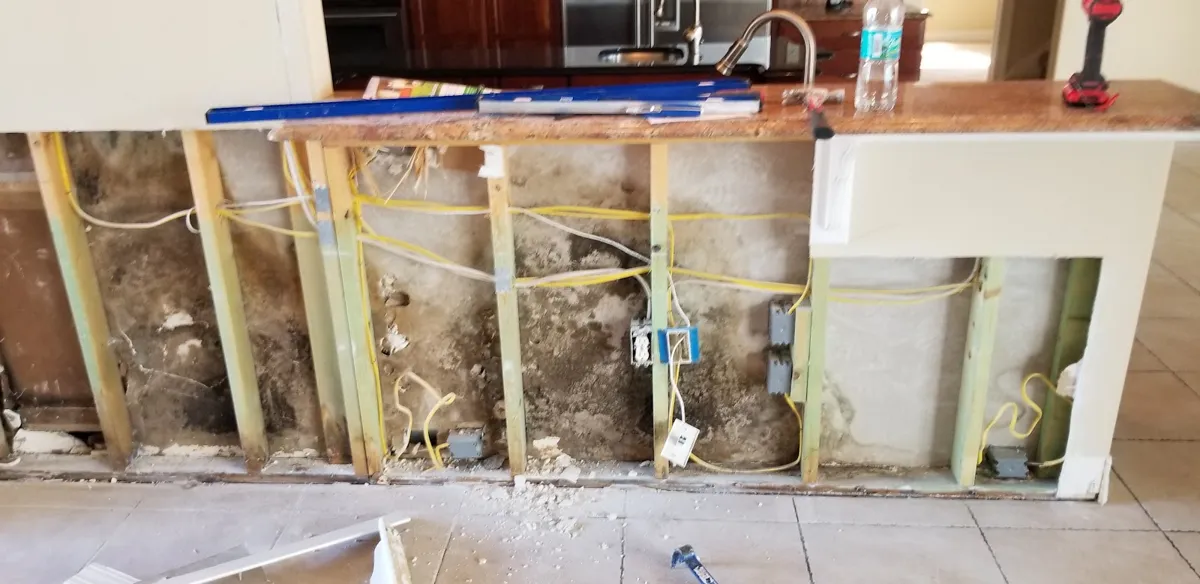
Call for help when the growth is bigger than that, when it is inside walls or under flooring, when it keeps coming back after cleaning, when it follows a leak or a flood, or when anyone at home has asthma or allergies. Our process is to find the moisture first, contain the area, remove what can't be cleaned, clean and HEPA-filter the air, and dry the structure with our TES high-heat system until the meters read dry. For what that typically costs, see our mold remediation cost guide.
Mr. Dry Out is licensed by the Florida Department of Business and Professional Regulation to remediate mold, and works out of Hudson across New Port Richey, Port Richey, Spring Hill, Clearwater, Tampa and the rest of Tampa Bay. See our mold removal service, or call us any time.
What Kills Mold FAQ
Nothing makes mold disappear on contact in a way that lasts. On a hard surface, scrubbing with detergent and water removes the growth right away, which the EPA recommends over killing it, because dead mold can still cause allergic reactions. Then dry the surface completely.
Neither is the first choice. In a 2015 lab study, household vinegar inhibited one common indoor mold but not another. The EPA does not recommend bleach as a routine practice, and Florida's health department says it is not needed in most cases. Never mix the two: bleach with an acid can form chlorine gas.
The same methods. The EPA treats mildew as another name for mold. Scrub hard surfaces with detergent and water, dry them, and lower the humidity so it does not return.
Not much that is practical in a home. The EPA says it is impossible to get rid of all mold and mold spores indoors, and that typical home UV air cleaners give little, if any, reduction in mold spores. HEPA filtration captures spores during cleanup; controlling moisture keeps them from growing.
Very little reaches it. Drywall is porous and mold grows into it and on its back side. Beyond a small patch, the EPA's remediation guidelines call for removing and discarding moldy drywall rather than treating it, after the moisture source is fixed.
Control the water. Fix leaks quickly, dry anything wet within 24 to 48 hours, keep indoor humidity under 60% (ideally 30 to 50%), and vent bathrooms and kitchens to the outdoors, per the EPA.