
The most common types of household mold are Cladosporium, Penicillium and Aspergillus, the three the CDC names as the most common indoor molds. Behind them come a handful of others that show up in damp spots, including Alternaria in showers and under sinks, and Stachybotrys, the greenish-black mold most people mean by "black mold".
This guide walks through the common types, what each tends to look like and where it grows, and then the part that surprises most people: the health agencies say you don't need to know which one you have. For help with mold you have already found, see our mold removal service.
From the CDC's About Mold and Your Health, the EPA's Mold Course, Chapter 1 (updated February 18, 2026) and the Florida Department of Health.
What Household Mold Is
Molds are fungi. The EPA's mold course says they "can grow on virtually any organic substance," and lists paper, cloth, wood, plant material and soil as common food sources in buildings. That covers most of a house: drywall paper, wood framing, carpet backing, dust and the soap film in a shower.
Food is never the limit. Moisture is. The EPA calls moisture "the most important factor influencing mold growth indoors," and notes that mold does not need a lot of it: a little condensation on a window sill or in a bathroom can be enough. That is why the type of mold you find mostly tells you how wet a spot has been, and for how long.
Common Types of Household Mold
Here are the types most often named in homes. Colors and textures are general descriptions; the same mold can look different as it grows, and several kinds are often growing together.
| Mold | Typical look | Where it tends to grow |
|---|---|---|
| Cladosporium | Green to brown, soft-looking | Carpet, upholstered furniture, under sinks and in cabinets |
| Penicillium | Velvety, bluish-green | Water-damaged homes: damp wallboard, soggy carpet, wallpaper |
| Aspergillus | Many species in many colors | Almost any damp surface |
| Alternaria | Velvety, with brown filaments | Under sinks and at the base of tubs and showers |
| Aureobasidium | Pink or gray at first, darkening to brownish-black | Painted surfaces, bare wood, tile grout, behind wallpaper |
| Stachybotrys chartarum | Greenish-black | High-cellulose material such as drywall, fiberboard and paper that stays wet |
The three most common indoor molds are from the CDC; Stachybotrys from the CDC's fact sheet; other looks and locations from Bob Vila's types of mold in homes guide (2020).
Cladosporium, Penicillium and Aspergillus are the everyday molds. Their spores are in outdoor air too, which is why the EPA says it is impossible to get rid of all mold and mold spores indoors. They become a problem when they land somewhere wet. Penicillium and Aspergillus are also the two molds tested in a 2015 study of household cleaning agents, which we cover in our guide to what kills mold.
Alternaria and Aureobasidium are the ones people meet in bathrooms: the dark edge along a tub, the spotting in grout or on a painted ceiling over the shower.
Stachybotrys is the one that worries people. The CDC says it needs constant moisture to grow, from water damage, leaks, condensation or flooding. Finding it is less a sign of a special mold than of material that has stayed wet for a long time.
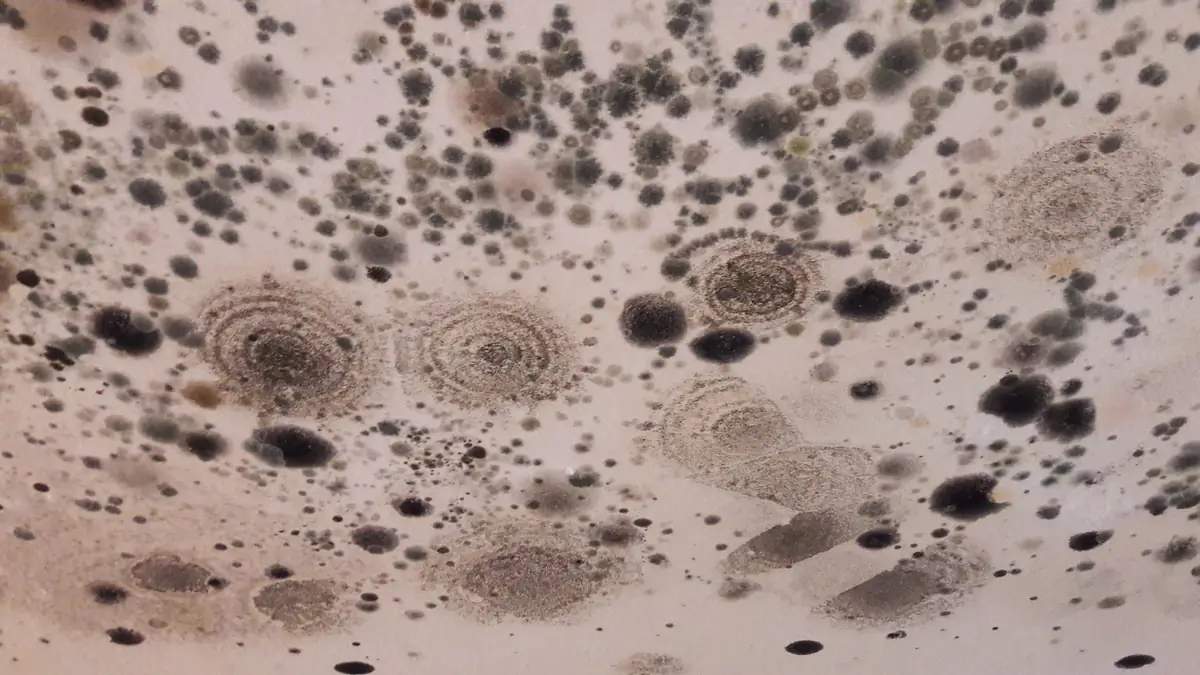
Black Mold and "Toxic Mold"
The EPA is direct that "black mold" is not a species or specific kind of mold, "and neither is 'toxic mold'." Molds come in many colors, including white, and plenty of dark molds are not Stachybotrys. Some molds can produce mycotoxins under some conditions, but the EPA also says "no one can tell whether a mold is producing mycotoxins just by looking at it."
The CDC's guidance is that "all molds should be treated the same with respect to potential health risks and removal." Its fact sheet also notes that no test proves an association between Stachybotrys and particular health symptoms. If you are worried about health effects, our guide to the warning signs of mold toxicity sets out what the CDC, EPA and Florida Department of Health actually say.
Mold vs. Mildew
In everyday use, mildew means the flat, powdery gray or white growth on a shower curtain or a damp towel, and mold means anything fuzzier or darker. The EPA doesn't draw a hard line: its mold course describes molds as "also called fungi or mildew." The practical difference is depth. Surface mildew on tile or glass wipes off. Growth that has gone into drywall, caulk or wood is a mold problem, whatever you call it.
Where We Find Mold in Florida Homes
Tampa Bay's humidity means the usual places are slightly different from a northern house with a basement. In the homes we work in, mold shows up most:
- In bathrooms and under sinks, where a slow drip or a shower without a working exhaust fan keeps things damp.
- Behind cabinets after a leak, especially kitchen and vanity cabinets where nobody looks.
- Inside walls, on the back of the drywall, after plumbing or appliance leaks.
- In attics under roof leaks, on the decking and in the insulation. Our attic mold remediation guide covers that one.
- Around AC air handlers, where condensation never dries: the drain pan, the closet and the ducts.
The EPA recommends keeping indoor humidity below 60 percent, ideally between 30 and 50. In Florida the air conditioner is doing most of that work, so a system that isn't dehumidifying well shows up as mold in closets and on cool walls.
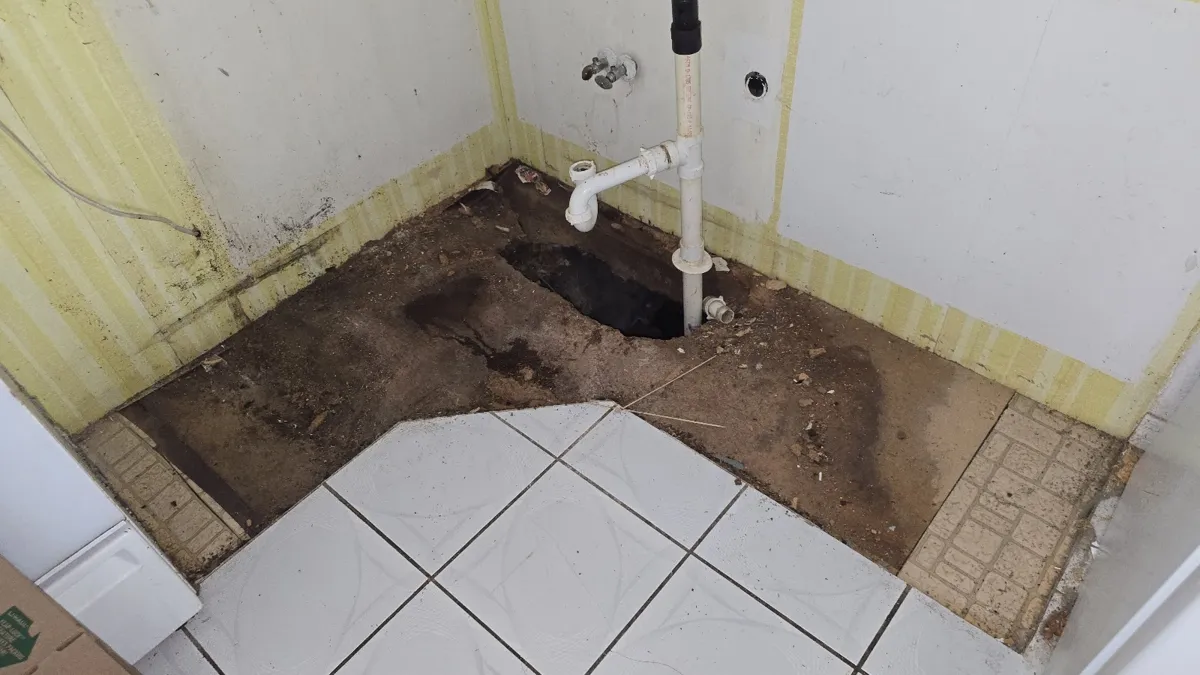
Do You Need to Know Which Type You Have?
No. The Florida Department of Health says it plainly: "If you think you have a mold problem in your home, you do not need to find out what type of mold you may have." It doesn't recommend testing to see what kind of mold is growing, and the CDC does not recommend mold testing either, partly because there are no set standards for what an acceptable amount of mold is.
The reason is that the type doesn't change the job. Every kind is handled the same way: find and fix the moisture, remove the growth or the material it has grown into, and dry what's left. Paying a lab to name the species of a patch you are going to remove anyway buys you a word, not a plan.
There are times an independent assessment is worth it, such as hidden mold, a sale or an insurance claim. In Florida that is a separate, licensed job from remediation, which our mold remediation cost guide explains.
What to Do About It
For a small patch on a hard surface, under about 10 square feet, the EPA says a homeowner can usually handle it: scrub with detergent and water, and dry completely. Our DIY mold remediation guide covers the steps and the gear.
Bigger growth, mold inside walls or under floors, or mold that keeps coming back is a different job. Under section 468.8411, Florida Statutes, work on more than 10 square feet of mold is mold remediation, and a company that does it for you needs a state license. We find the moisture first, contain the area, remove what can't be cleaned, run HEPA filtration, and dry the structure with our TES high-heat system until the meters read dry.
Mr. Dry Out is licensed by the Florida Department of Business and Professional Regulation to remediate mold, and works out of Hudson across Tarpon Springs, Dunedin, Largo, St. Petersburg, Brooksville and the rest of Tampa Bay. See our mold removal service, or call us any time.
Household Mold FAQ
The CDC names Cladosporium, Penicillium and Aspergillus as the most common indoor molds. Alternaria and Aureobasidium are common in bathrooms, and Stachybotrys chartarum grows on drywall and other high-cellulose material that stays wet.
The CDC says all molds should be treated the same with respect to potential health risks and removal. The EPA says no one can tell whether a mold is producing mycotoxins just by looking at it. Treat any growth as something to remove, and fix the moisture behind it.
No. The EPA says black mold is not a species or specific kind of mold, and many molds are dark. People usually mean Stachybotrys chartarum, a greenish-black mold that needs constant moisture to grow.
Usually not. The Florida Department of Health says you do not need to find out what type of mold you may have, and the CDC does not recommend mold testing. The type does not change how mold is removed.
Mildew usually means flat, powdery surface growth on things like shower curtains and tile. The EPA describes molds as also called fungi or mildew, so the line is loose. Surface growth wipes off; growth inside drywall, caulk or wood needs removing.
Mold needs moisture, and Florida has plenty. Leaks, AC condensation and high humidity keep materials damp. The EPA recommends keeping indoor humidity below 60 percent, ideally 30 to 50, and drying anything wet within 24 to 48 hours.